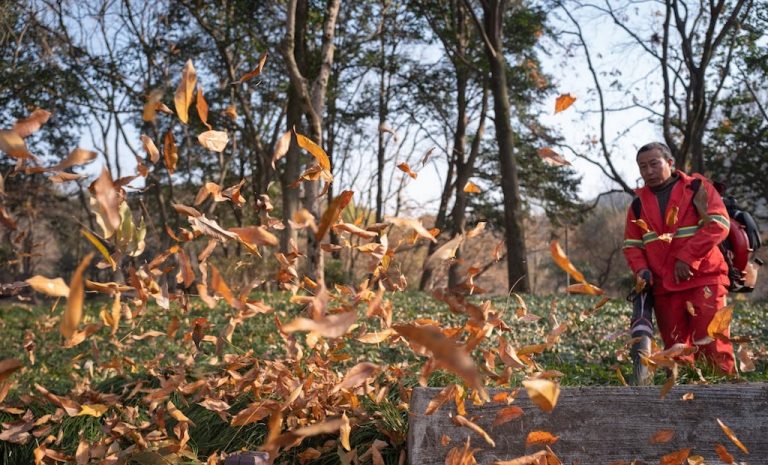
Across Contra Costa County, we care deeply about clean air, healthy communities, and climate action. Yet every week, in neighborhoods throughout the county, one of the most polluting small engines in California is still in regular use: the gas-powered leaf blower.
You hear it. You breathe it. And increasingly, you feel its impact.
Gas leaf blowers create three distinct problems for our communities: air pollution, noise pollution, and direct health impacts. Each one matters. Together, they make a compelling case for change.
Air Pollution: A Preventable Source of Emissions
Gas-powered leaf blowers use small, inefficient engines that emit high levels of smog-forming pollutants and fine particulate matter.
According to the California Air Resources Board (pdf), small off-road engines, including those used in landscaping equipment, are a significant source of air pollution in our state. In some cases, running a gas leaf blower for one hour can produce pollution comparable to driving a passenger vehicle hundreds of miles.
That pollution does not stay contained in one yard. It drifts into neighboring homes. It lingers in the air. It adds to the regional air quality challenges we already face, especially during wildfire season.
Cutting down on local emissions is one concrete way we can help protect the air we breathe.
Noise Pollution: A Shared Community Burden
Gas leaf blowers usually run at 90–100 decibels, which is roughly the level of a motorcycle. What makes them particularly disruptive is the low-frequency sound, which travels well beyond the property being serviced. It cuts through walls. It carries across multiple houses.
This is more than just an inconvenience. It affects daily life. Interrupted work calls. Disturbed sleep. Agitated pets. Lost quiet time outdoors.
In a county where many people work from home and value peaceful neighborhoods, persistent high-decibel noise affects quality of life in real ways.
We share our air. We also share our soundscape. Community livability depends on both.
Health Impacts: Who Bears the Cost?
Air and noise pollution aren’t just abstract problems. They have real effects on our health.
Fine particles in the air can lead to breathing and heart problems. Children, seniors, outdoor workers, and people with asthma or lung issues are especially at risk.
Noise pollution is linked to stress, sleep disruption, and elevated blood pressure. For some residents, particularly those working from home or caring for infants or elderly family members, the impact is ongoing.
Landscaping workers themselves face repeated exposure to exhaust and high decibel levels. Cleaner equipment reduces risks not just for homeowners but for the workers operating the tools.
Public health is not separate from environmental policy. It is central to it.
Cleaner Alternatives Are Here
The encouraging news is that better options already exist. Modern electric leaf blowers offer several benefits:
- No tailpipe emissions
- Significantly quieter
- Lower maintenance
- Well-suited for residential use
Many California cities, including Lafayette and Walnut Creek in Contra Costa County, have already transitioned away from gas-powered blowers. The shift toward cleaner landscaping equipment is accelerating statewide.
This is not a future technology. It’s available now.
What We Can Do
System-level policy matters. So do individual choices.
- If you own a gas leaf blower, replace it with an electric model or use manual tools when practical.
- If you hire a landscaping service, request that they provide their own electric equipment or supply it for them. (Eligible commercial landscaping services in Richmond and San Pablo can apply to Bay Area Air District (BAAD) for up to $1400 in their Commercial Lawn and Garden Equipment Exchange program.)
- Talk with your neighbors about transitioning away from gas leaf blowers, so more households are aware of the options.
- Support local policy efforts by attending city council meetings or signing community petitions.
- Help start a campaign to ban gas leaf blowers in your Contra Costa city: Join our City Liaison team.
Even sharing information about cleaner alternatives on social media or within neighborhood groups helps build momentum for change.
We can’t control wildfire smoke. We can’t solve climate change overnight. But we can reduce preventable pollution in our own neighborhoods.
- Cleaner air
- Quieter communities
- Healthier families
- Healthier landscape workers
Contra Costa has the opportunity to lead through aligning our everyday choices with the clean air and community health values we already hold. Join our City Liaison program and help us initiate a gas-powered leaf-blower ban where you live.