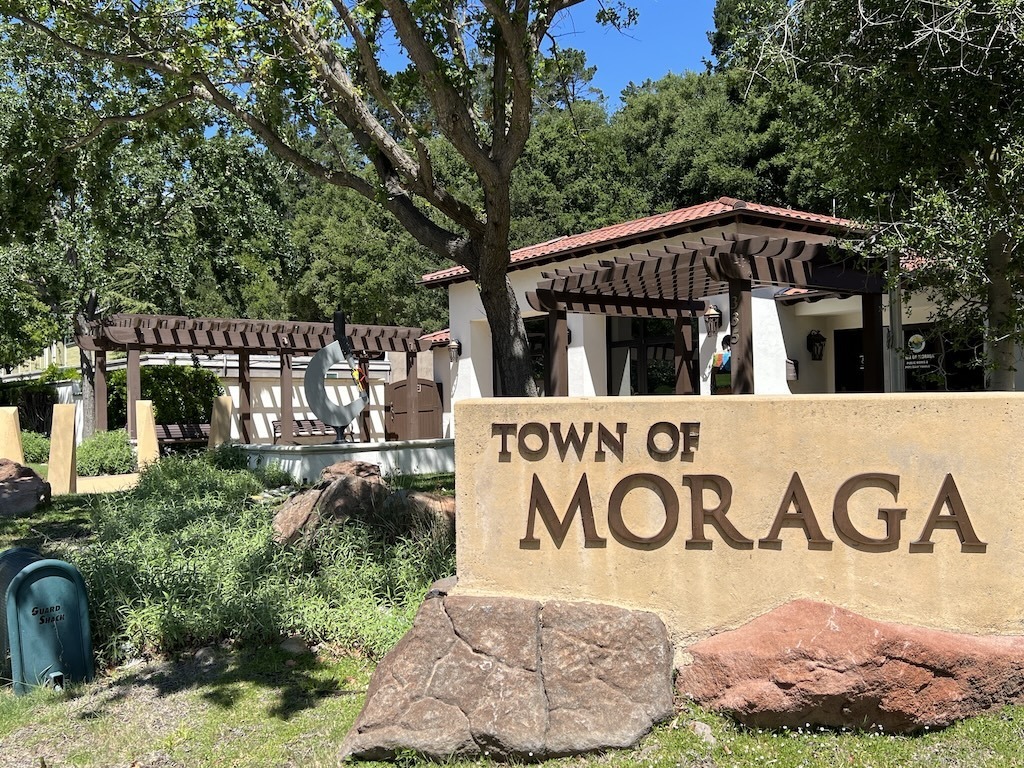
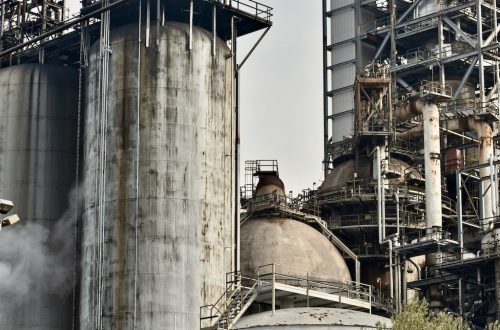
Welcome to Moraga CA Climate Action & Advocacy, your resource for understanding how our community is addressing climate change. Here you’ll find information about Moraga’s climate change initiatives, opportunities for local advocacy, and ways residents can help shape a more sustainable future for our town.
The Town of Moraga was born in activism. In 1974, residents of the then-unincorporated community united to successfully halt plans to build enough housing for a city of 52,000 people and run a freeway through the area. Their collective action protected Moraga’s open hillsides and set the stage for decades of community-led decision-making.
The land was first inhabited by the Saklan, a native people, of the Bay Miwok language group. The town was named for Joaquín Moraga, a member of the famed Californio family who received the land grant in 1835 as part of the Mexican government’s effort to encourage ranching in the area.
Today, Moraga’s 16,637 residents continue this legacy of activism and engagement, showing strong community spirit through events such as summer concerts, Fourth of July celebrations, and active participation in local boards and commissions.
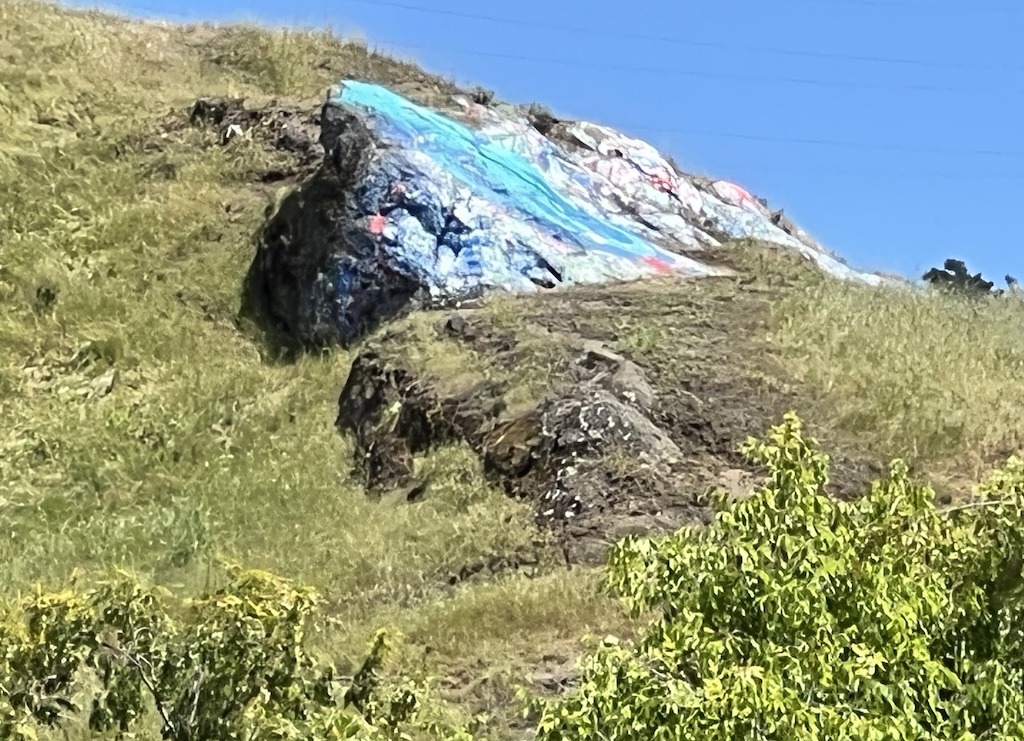
Painted rock--an annual ritual for Moraga high school students
Image credit: Christine Stevens
Painted rock--an annual ritual for Moraga high school students
Image credit: Christine Stevens
The land was first inhabited by the Saklan, a native people, of the Bay Miwok language group. The town was named for Joaquín Moraga, a member of the famed Californio family who received the land grant in 1835 as part of the Mexican government’s effort to encourage ranching in the area.
Today, Moraga’s 16,637 residents continue this legacy of activism and engagement, showing strong community spirit through events such as summer concerts, Fourth of July celebrations, and active participation in local boards and commissions.
Student walks toward St. Mary's College's entrance and iconic tower
Image credit: Christine Stevens
Students Are a Vital Part of Moraga Life
The community, bordered on three sides by open space, is home toSt. Mary’s College of California, whose students and faculty contribute to the town’s vibrant civic life.
And the town’s high school students show their creativity by regularly painting a flat outcropping on a prominent hillside—currently a brilliant blue.
Moraga’s Award-Winning Housing Element
Moraga is currently led by a strong, visionary, forward-looking staff and council. They have won recognition for a robust 2023-2031 housing element that clears the way for major infill housing to meet state requirements.
The Town of Moraga has been named a “Prohousing Jurisdiction” by the California Department of Housing and Community Development.
Infill housing involves building new residences within the already developed areas of a city or community. Infill is generally considered the most eco-friendly option in most communities, especially those like Moraga, where the surrounding hills can make development expensive and create hazards, including wildfires, landslides, and flooding, as well as threaten natural areas.
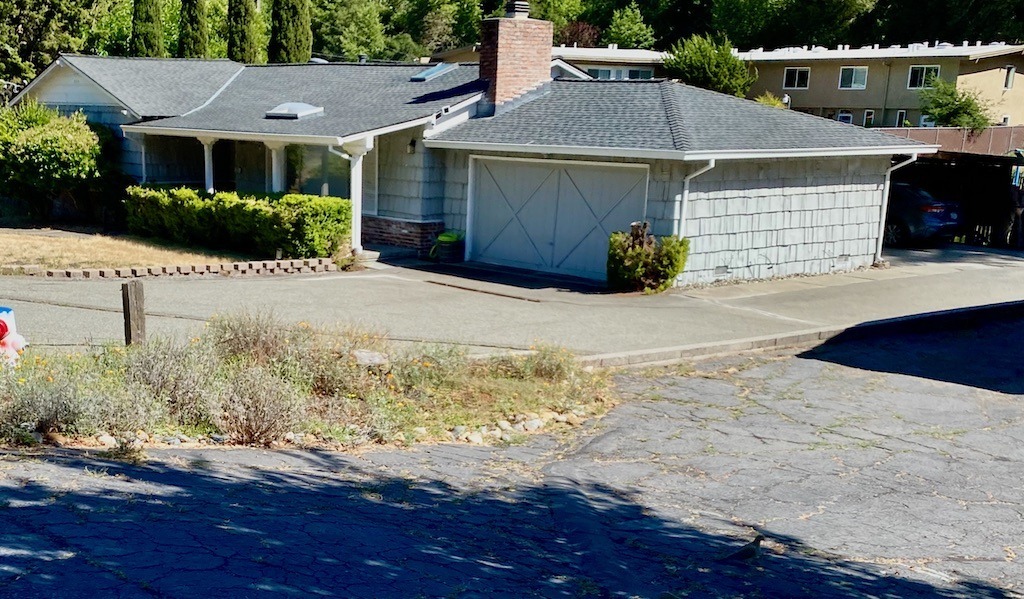
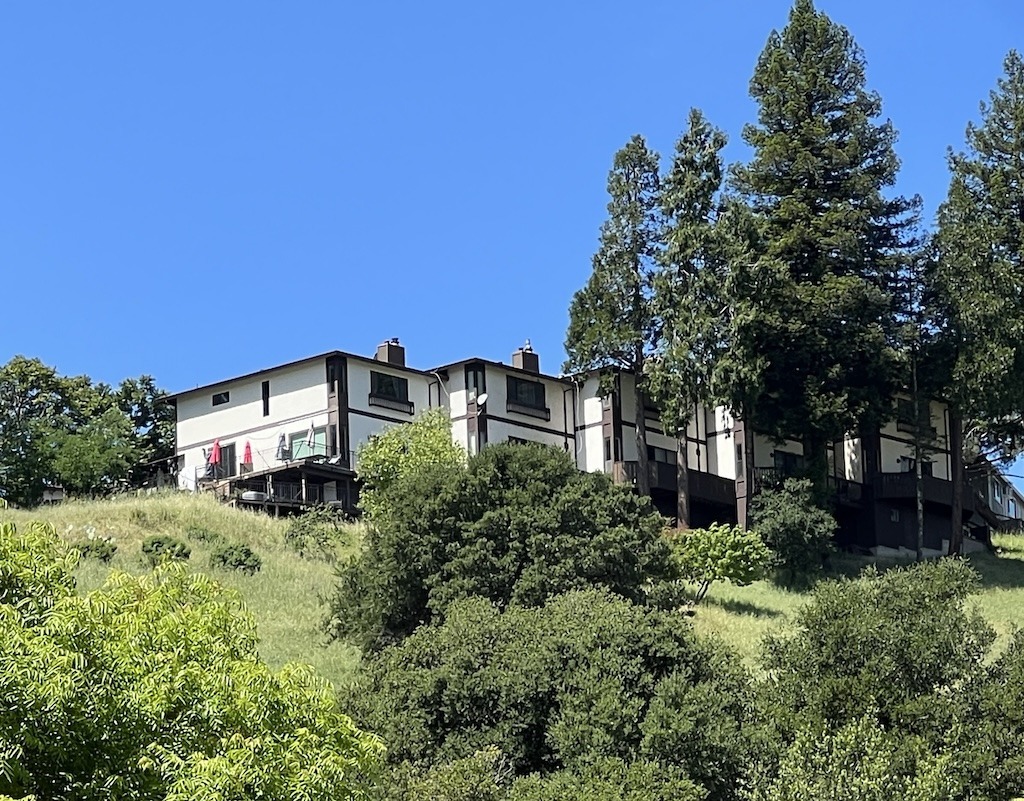
Homes and apartment buildings reside adjacent to one another and the forested hills surrounding Moraga
Image credit: Volunteer staff. photo
Homes and apartment buildings reside adjacent to one another and the forested hills surrounding Moraga
Image credit: Volunteer staff. photo
Moraga is currently led by a strong, visionary, forward-looking staff and council. They have won recognition for a robust 2023-2031 housing element that clears the way for major infill housing to meet state requirements.
The Town of Moraga has been named a “Prohousing Jurisdiction” by the California Department of Housing and Community Development.
Infill housing involves building new residences within the already developed areas of a city or community. Infill is generally considered the most eco-friendly option in most communities, especially those like Moraga, where the surrounding hills can make development expensive and create hazards, including wildfires, landslides, and flooding, as well as threaten natural areas.
Economic Challenges
Hillside homes in Moraga, CA
Image credit: Christine Stevens
Surrounded on three sides by sun-drenched hills, Moraga residents love the town’s semi-rural character but struggle to invigorate its local economy.
Although the majority of residents are financially comfortable, the town is not. The local economy is primarily based at the Rheem and Moraga shopping centers, and residents must go elsewhere for many types of purchases.
Despite these challenges, Moraga’s small-business sector includes cherished institutions like the iconic Rheem Theater, which continues to screen current movies and bring residents together.
The iconic Rheem Theater in Moraga, built in 1957 by Donald Rheem of the Rheem Manufacturing Co.
Image credit: Christine Stevens
The iconic Rheem Theater in Moraga, built in 1957 by Donald Rheem of the Rheem Manufacturing Co.
Image credit: Christine Stevens
Although the majority of residents are financially comfortable, the town is not. The local economy is primarily based at the Rheem and Moraga shopping centers, and residents must go elsewhere for many types of purchases.
Despite these challenges, Moraga’s small-business sector includes cherished institutions like the iconic Rheem Theater, which continues to screen current movies and bring residents together.
Visionary General Plan
Children run into the local ice cream shop in Moraga, CA
Image credit: Volunteer staff photo
The town’s General Plan 2040 is a detailed roadmap for positive economic, housing, and climate adaptation changes that residents would like to see in the foreseeable future; and it discusses how the town might improve its financial situation and tax base.
The updated plan, completed in 2024, notes that residents would like to see more local restaurants and stores and says that St. Mary’s College, which had 2,736 students as of 2024, offers an opportunity to create retail expansion with a “college town” ambiance.
The General Plan notes that the Association of Bay Area Governments has specified that Moraga needs to add 1,118 housing units to its current housing stock, many of which would be multi-family and townhomes.
Transportation Climate Challenges
Transportation Largest Source of Moraga Air Pollution
Climate change is top of mind in the transportation section of the General Plan, which notes that 48 percent of the city’s greenhouse gas emissions come from transportation, far outstripping the next-largest source, residential, at 34 percent.
Moraga bike route
Image credit: Volunteer staff photo
Moraga bike route
Image credit: Volunteer staff photo
Transportation Largest Source of Moraga Air Pollution
Climate change is top of mind in the transportation section of the General Plan, which notes that 48 percent of the city’s greenhouse gas emissions come from transportation, far outstripping the next-largest source, residential, at 34 percent.
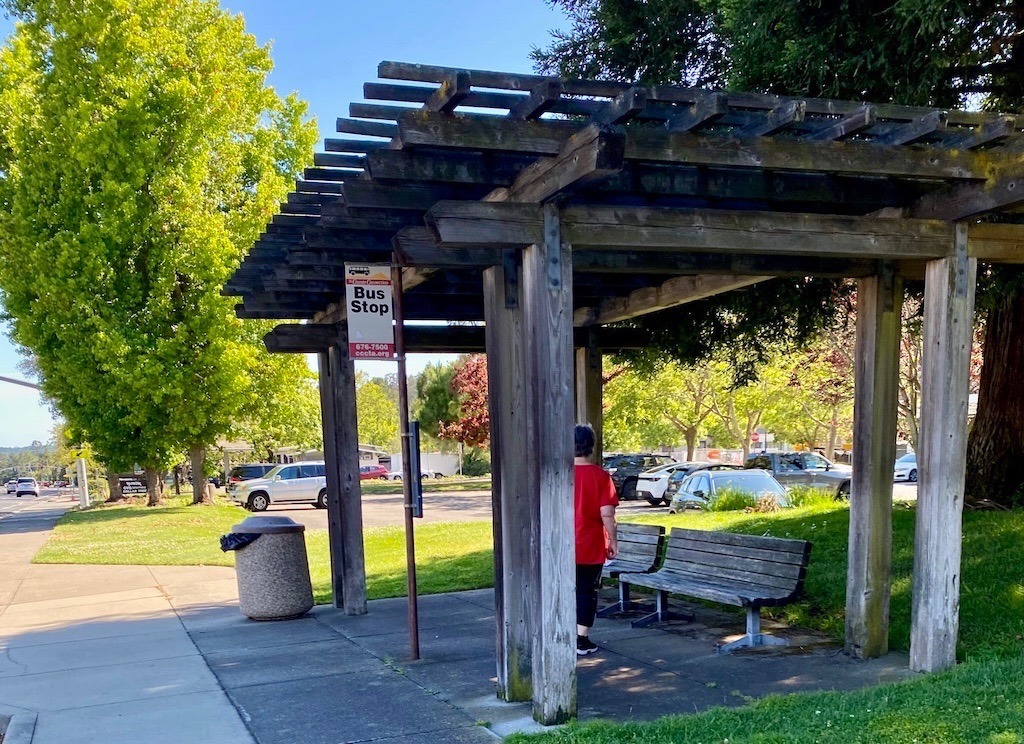
One of two Moraga bus stops
Image credit: Volunteer staff photo
Transit Access Challenges for Moraga Commuters
The General Plan notes that “Moraga’s distance from freeways and BART lines has made the community heavily reliant on cars.” The plan states that 70 percent of households have two cars, and 77 percent of those who work outside their homes drive to work, with most driving alone. The plan notes that public transit is “limited” and buses run to a BART station only every 30 minutes.
Using BART could become more difficult if county voters do not pass the Connect Bay Area ballot measure in November, which would help stabilize the vital transit system. The Orinda station is one of those BART has said it will have to close in the first phase of budget cuts if the county doesn’t approve the new, time-limited half-cent sales tax. The Lafayette and Orinda stations are closest to Moraga, and closing the Orinda station would crowd the Lafayette station with riders and people seeking parking, making it much more difficult for Moraga residents to use the system.
In addition to the options above, the 511 CTA interactive web page offers vanpools and casual carpools. However, many commuters find it difficult to match their schedules and destinations with the available routes, making these alternatives less practical for most Moraga residents.
Local Solutions and Improvements
Improving transit access and reducing reliance on cars are essential components of Moraga sustainability efforts, helping to build a more environmentally responsible community.
To address transportation access and emisions issues, Moraga is working on the following.
Enhancing streets for walking and biking, including improving crosswalks and adding street trees for general walkability;
Partnering with local agencies to increase public transit options;
Improving traffic flow with technology and signal synchronization;
Attracting more local businesses to reduce the need for residents to drive to other cities for goods and services.
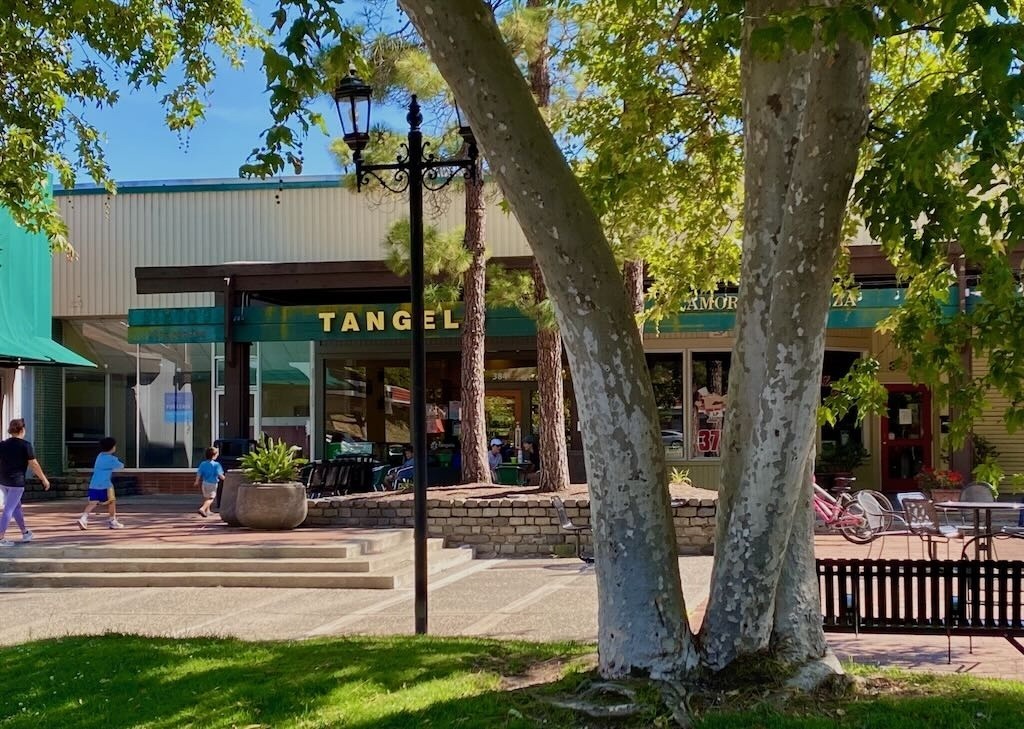
Eateries and a childcare center in one of two Moraga shopping centers
Image credit: Volunteer staff photos
Eateries and a childcare center in one of two Moraga shopping centers
Image credit: Volunteer staff photos
Local Solutions and Improvements
Improving transit access and reducing reliance on cars are essential components of Moraga sustainability efforts, helping to build a more environmentally responsible community.
To address transportation access and emisions issues, Moraga is working on the following.
Enhancing streets for walking and biking, including improving crosswalks and adding street trees for general walkability;
Partnering with local agencies to increase public transit options;
Improving traffic flow with technology and signal synchronization;
Attracting more local businesses to reduce the need for residents to drive to other cities for goods and services.
Moraga Needs a New Climate Action Plan
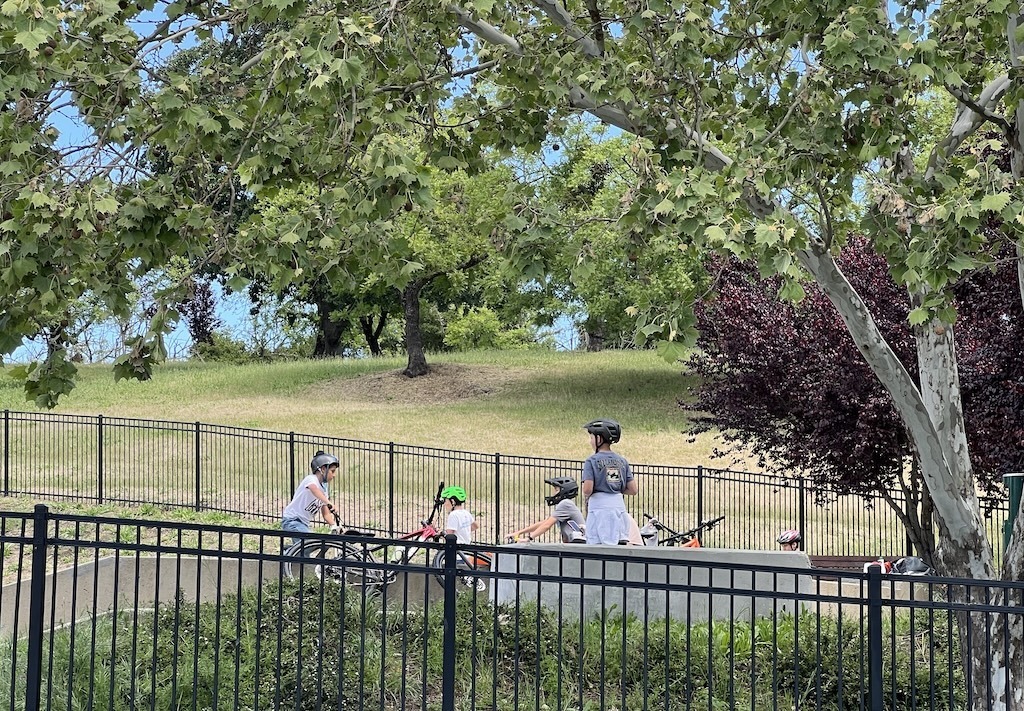
The bicycle ramp at Moraga Commons gets good use by local youngsters
Image credit Christine Stevens
The town’s 2014 Climate Action Plan extended projections only through 2020, leaving a significant gap in Moraga’s climate policy. The city did not plan for a review upon its conclusion, nor did it authorize an update to advance strong Moraga environmental action.
The former planning director and some former council members pushed hard for a new climate action plan to be funded immediately following completion of the General Plan. To date, no action has been taken.
We at 350 Contra Costa Action will continue to seek alliances with Moragans to urge the town Council to authorize funding for the development of a climate action plan.
Take Climate Action in Moraga Now
Play area at Moraga Commons park
Image credit: Christine Stevens
Become a Moraga City Liaison and work with us to ….
Just one person helped influence Moraga’s town council to add measures to the General Plan aimed at reducing greenhouse gas emissions and preserving our clean, breathable air for future generations.
We invite all interested to join our Moraga City Liaison team and work with us to support Moraga in climate-friendly program and policy development.
Moraga’s five council members are elected at large, and each serves a four-year term. Elections are held every two years for the two or three open seats in that election cycle. Each year, the council elects the mayor from among its members.
The Town Council meets on the 2nd and 4th Wednesdays every month at 5:30 pm in the Council Chambers and Community Meeting Room at 335 Rheem Boulevard, Moraga, CA 94556.
Attend in person or watch Moraga Town Council meetings, as well as commission and committee meetings, on YouTube Live. To receive notifications of official town meetings, sign up here.
We invite you to help us lead Moraga toward a brighter, more sustainable future. Together, we can embrace climate responsibility and accountability for our community. Your voice matters!