It’s 2050.
Three year olds no longer know what the color green looks like. Food pills have reemerged because every field on the planet has dried up. You can go swimming anywhere as long as you don’t mind the e-coli. And Atlantis isn’t just a story anymore, it’s a reality; the physical manifestation of our consequences for every city submerged under the tides of change.
It may seem unlikely, but this is the world our future generations will one day wake up to. This is the world we inherited, and it’s the world we are passing on. However, the future doesn’t have to remain so bleak; the power to break the cycle courses through each of our veins.
Our way of breaking the cycle begins with art, a fuel with the force to replace fossil fuels.
Poetry is a way of life. A mechanism for the world to see one person’s soul laid bare with the weight of thousands. It is the language of fire, turning silence into music and nature’s grief into its own language. But most of all, it is a way to break apart and piece together on paper when speaking aloud doesn’t feel safe enough. It cannot be mistaken for something small when for so many, it is oxygen, and for nature, it is voice.
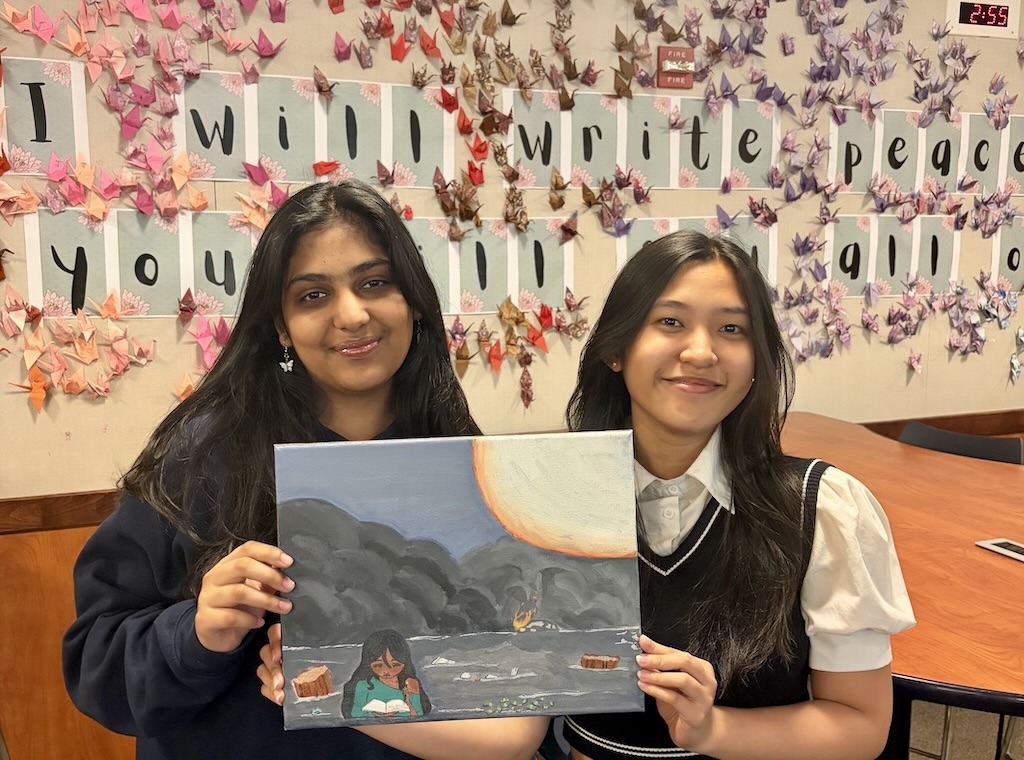
Suhani Goyal is a junior at Dougherty Valley High School who can be found at the intersection between creativity, leadership, and a love for storytelling. When not leading or learning, you’ll find her scribbling poetry into the margins of journals, or chasing inspiration wherever it hides. Her poem, ‘Secondhand Smoke’ is a eulogy to nature— a testament to the revitalization of youth action for our planet.
Secondhand Smoke
by Suhani Goyal
we never lit the match
and yet somehow
we’re breathing in the ash
it curls beneath our doorframes
seeps into our skin
settles in the silence
between dinner conversations
finds its home
in the gap between heartbeats
dad says the summers feel angry now
like a cruel mirage bestowed upon us
by the very light that once held warmth
mom counts hurricanes instead of birthdays
my cousin stopped jogging by the bay
the water climbed too high
the air too thick to hold
and me?
i scroll past statistics
with a guilt i can’t name
i write poetry till my hands fall apart
while the planet falls into chasms
a silent departure; felt more than seen
like a secret we all knew
but dared not say aloud
the sky doesn’t blush anymore
it bruises
our cities are tired
our lungs borrowed
farmers bury their hopes next to dry roots
while billionaires build bunkers
with money that still won’t buy
a second earth
they say it’s political
i say it’s personal
because climate change isn’t a headline
it’s my friend’s medication costs rising
it’s my uncle’s job lost to a dried-out field
it’s the fear that the future
won’t know green
the way we did
but still
i believe in healing
in hands planting more
than they destroy
in change that comes
not in silence
but in song
we are the generation
that inhales smoke
and exhales resistance.
Art, on the other hand, is the epitome of how life can stain. It is the catalyst for change, acting as a new lens through which to see the world. From Da Vinci to Picasso, history has shown us time and time again how artists can possess a Midas touch, turning a bleak atmosphere into one bursting with vibrancy. Nature itself is a work of art, and it’s time that we treat it as such.
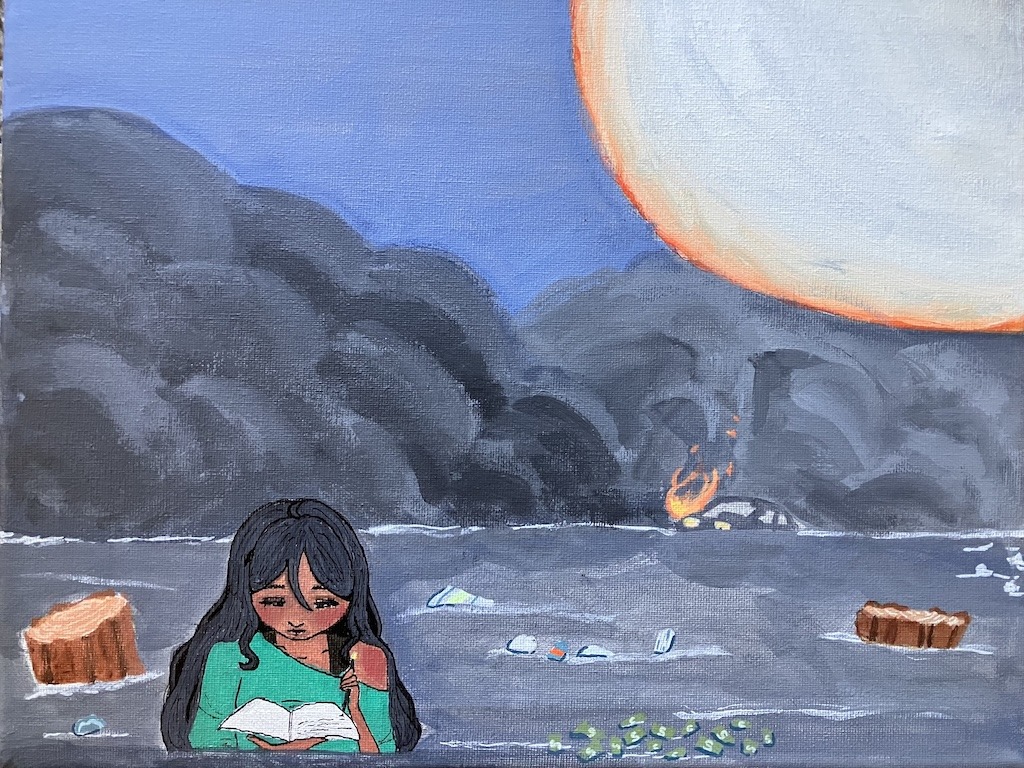
Amber Sabrina is a junior at Dougherty Valley High School who finds purpose in the smallest details others may miss. She finds a way to bring to light the overlooked through visual arts, with a penchant for both drawing and painting. Her acrylic painting, ‘Still I Write’ is a visual representation of Secondhand Smoke. Although it may seem surreal at present, it foreshadows a potential reality; a world falling apart around us.
Used with permission
Often, the value of individual action is disregarded in the face of collective action—and yet, what we begin as an individual is the foundation for what we build upon as a society. Every small action that we call insignificant—whether it be creating art, reducing individual plastic use, or buying secondhand—can have a ripple effect. Calling yourself a climate activist does not have to be limited to the level of policymakers or global advocates, because grassroot-level initiatives can matter just as much.
And so, we urge you to create. To inspire. To change— not just the world, but also yourself.
Guest writer Suhani Goyal is a student at Dougherty Valley High School in San Ramon, California.
Pub May 23, 2026
Photo credit: Student photo, used with permission