This November, you can help prevent drastic cuts to Bay Area train and bus service, fare hikes, and layoffs by voting Yes for the Regional Transit Measure (RTM). The measure seeks to prevent severe service cutbacks and the possible closure of key public transit stations and routes in the region.
For thousands of Contra Costa highway commuters, the measure’s passage could mean continued access to essential BART and bus transit options that help keep already jammed Highway 4 and other area highways from grinding to a complete halt.
For our positions on other social justice and environmental measures on this year’s ballot, visit our 2026 California Ballot Propositions Guide.
BART Cutbacks Would Jam Highways 4, 242 and 680
On Feb. 26, 2026, the BART board of directors approved a plan outlining cutbacks they may need to make to balance the projected fiscal year 2027 budget shortfall of $376. According to the funding overview fact sheet published by BART, if the transit measure does not pass on Nov. 3, BART may in January of 2027:
- Cut train hours by 63 percent. Trains would run only every 30 minutes throughout the day, and the system would close at 9 pm instead of the current midnight closing time.
- Increase fares and parking fees by 30 percent. The fact sheet says this would increase the “average” BART fare of $4.98 to $6.38.
- Lay off 600 employees.
- Attempt to save $30 million by cutting its “non-service budget” which includes police, cleaning, maintenance and other things.
- Defer capital allocations, retiree medical contributions among other temporary cost-saving measures.
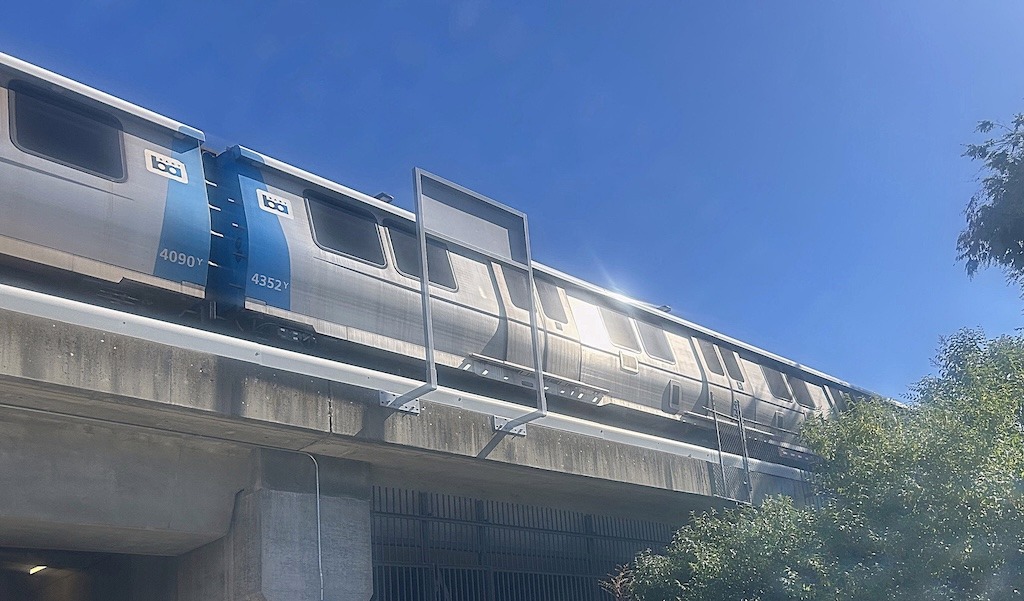
These cuts would likely put many more cars onto area highways as commuters find they cannot reliably get to work on time due to train crowding. At times it is currently difficult to board a train because of peak hour crowding. Reduced service would exacerbate the problem.
People going to San Francisco for evening sports events, concerts, plays or other entertainment could not use BART if the system were to shut down at 9 pm. Many people who live in the East Bay and work in restaurants and bars in San Francisco, Oakland, and Berkeley would be unable to use BART if it closes that early.
BART Projects $376 Million Deficit for 2027
BART officials project a $376 million deficit in fiscal year 2027 and deficits of between $375 million and $400 million in the years to come (BART fact sheet). The transit measure, if approved, would bring in $310 million each year for BART, helping significantly with the projected annual deficits. The proposed tax and resulting annual revenue would last for 14 years. The measure would raise a total of $1 billion annually, with the rest going to Caltrain, local bus transit systems including buses in Contra Costa and Alameda Counties, and the San Francisco MUNI, agencies where service cutbacks are projected if it does not pass.
BART directors have said that the additional revenues the tax would bring will be enough to avoid cutbacks if the transit measure is approved Nov. 3.
Possible Second Phase Cuts in July 2027
BART’s financial fact sheet notes that if the transit measure fails to pass, additional cuts might be needed in July of 2027, which would occur “if feasibly safe.” These include:
- Cutting service hours by an additional 40 percent for a cumulative total of 70 percent below 2026 hours
- Closing up to 15 BART stations and/or up to 25 percent of system track miles
- Laying off another 600 employees
- Continuing to defer maintenance, employee health contributions, and most of other capital expenses
Currently, BART stations keep many people off the roads, making the commute bearable, even though it is often slow. Fewer trains would mean increased auto traffic and worsening traffic congestion, further slowing the pace on Highways 4, 680, and 242. Additionally, a “transit hub” development concept planned for the former Naval Weapons Station in Concord could be in jeopardy.
Possible Public Transit Cutbacks for Contra Costa County
The current BART fact sheet does not name the stations that might be shuttered if closures occur. BART officials said in February of 2026 that 10 station closures were part of the first phase of cutbacks that would occur in January, but it appears that station closures have been moved to July if needed.
One of the stations initially slated for closure in January was the North Concord station. This station has been designated as a transit hub for a proposed transit-friendly development of more than 12,000 residences on part of the former Naval Weapons Station property. It is unclear how those plans might change if the station were to close.
“Contingency” Plan Would Shut Down the System
The fact sheet also describes a “contingency” plan that “if at any point it is determined that BART can’t safely or legally operate with available resources, (BART would) stop passenger service and use existing District tax revenues to secure system assets.”
The Transit ‘Death Spiral’: Gridlock and Air Pollution
A report produced by analysts from SPUR, a Bay Area agency devoted to environmentally friendly planning in the area, warns that area transit is facing a “fiscal cliff.” SPUR’s report entitled “Bumper to Bumper” states that a transit “death spiral” could result if agencies are forced to make significant cuts. Pages 24 and 25 of “Bumper to Bumper” say most or all public transit could eventually cease if steep cuts lead to ever-diminishing ridership and in turn ever-diminishing revenues.
Ending public transit would be catastrophic not only for those dependent upon trains and buses, but could send Bay Area freeways into gridlock.
In addition to increasing commute time for local residents, the resulting additional vehicle trips would substantially increase consumption of fossil fuels and the resulting air pollution in Contra Costa and surrounding counties. Polluted air has been shown to increase the number of pulmonary, heart-related and other health problems.
Vote Yes on the Regional Transit Measure (RTM)
Please vote yes on Measure RTM to keep all of our BART service intact, keep stations open and avoid further crowding on our local highways. The measure will help keep our region moving and avoid worsening gridlock and air pollution.
Pub. Oct 9, 2026
Image credit: Anne Grenier