Trains Carrying Coal Leave Dust in Their Wake
As plans move forward for a new coal shipping terminal at the Port of Oakland, concerns are mounting about the health and environmental consequences for residents in both Contra Costa and Alameda counties. The project, which has sparked legal battles, political debate, and grassroots opposition, stands to increase the number of coal trains moving through local neighborhoods—raising worries about coal dust exposure, air quality, and environmental justice.
Now, California legislators have passed AB40, the Community First Coal Review Act, which would require a comprehensive environmental review before the coal terminal could be built. The bill has one more hurdle: Gov. Gavin Newsom has until Sept. 30 to decide its fate. You can help by contacting his office at https://www.gov.ca.gov/contact/ to urge him to sign it. This matters for Contra Costa and Alameda County residents, as trains carrying coal pass through many communities en route to Oakland.
Summary of Key Developments
Oakland court battle: The City of Oakland lost a court battle to block a coal shipping facility at its port area, but developers agreed to pollution reduction requirements as a condition of the win.
$75 million in federal funding: The pro-coal Trump administration promised $75 million for the project, calling it “clean, beautiful coal.” (Oaklandside June 4, 2026)
More coal trains expected: The proposed terminal would significantly increase the number of coal trains currently running through Contra Costa and Alameda County neighborhoods.
Health risks from coal dust: A UC Davis study showed that coal dust from existing Richmond-bound coal trains raises risk of asthma, heart disease, hospitalizations, and premature death for nearby residents.
Take Action
Sign the No Coal letter: The No Coal in Oakland organization, together with 350 Bay Area Action and other allies, urge residents to sign a letter asking the Air District to set safety standards for coal shipments.
Urge Gov. Newsom to require a review: The proposed Oakland Coal Terminal lacks an environmental impact review (EIR). Tell Gov. Gavin Newsom to sign AB40, requiring a full EIR for new coal facilities.
Summary of Key Developments
Oakland court battle: The City of Oakland lost a court battle to block a coal shipping facility at its port area, but developers agreed to pollution reduction requirements as a condition of the win.
$75 million in federal funding: The pro-coal Trump administration promised $75 million for the project, calling it “clean, beautiful coal.” (Oaklandside June 4, 2026)
More coal trains expected: The proposed terminal would significantly increase the number of coal trains currently running through Contra Costa and Alameda County neighborhoods.
Health risks from coal dust: A UC Davis study showed that coal dust from existing Richmond-bound coal trains raises risk of asthma, heart disease, hospitalizations, and premature death for nearby residents.
Take Action
Sign the No Coal letter: No Coal in Oakland and allies, including 350 Bay Area, urge residents to sign a letter asking the Air District to set safety standards for coal shipments.
Urge Gov. Newsom to require a review: The proposed Oakland Coal Terminal lacks an environmental impact review (EIR). Tell Gov. Gavin Newsom to sign AB40, requiring a full EIR for new coal facilities.
Proposed Oakland Coal Terminal Lacks Current Review
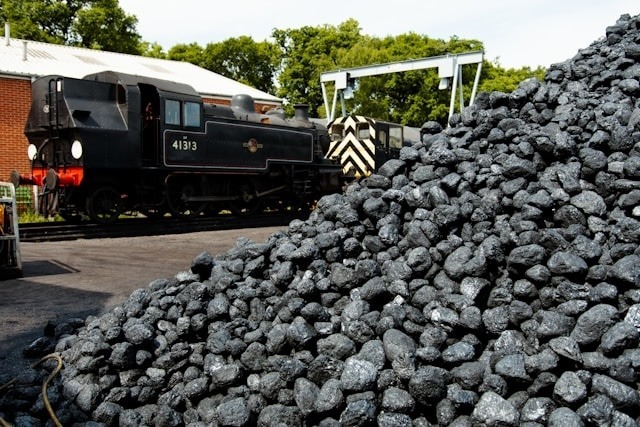
The days when passing trains spewed black smoke from burning coal used to run their engines are thankfully gone. But now, people living in Contra Costa and Alameda Counties near the tracks are threatened with dust from freshly mined coal.
The Richmond coal terminal is winding down to close at the end of 2026. But developers known as Oakland Bulk and Oversized Terminal (OBOT) are proposing a coal terminal at the former Oakland Army Base in the Oakland port area that would mean even more coal trains passing through Contra Costa and Alameda Counties. The current projected date for opening the facility is 2028. (Oaklandside article Sept. 25, 2025)
The most recent environmental review of the terminal area was an update created in 2012, three years before the developer’s plans for a coal facility became public in 2015. That review did not include plans for a coal shipping operation. (Earthjustice Letter to Bay Area Air District, 2026).
But AB 40, a California legislative bill authored by Mia Bonta, D-CA18, would require a comprehensive review that includes the health and environmental risks that a coal shipping operation would pose. The bill, currently on the governor’s desk, would require a full environmental review for all projects statewide involving more than five short tons of coal.
To ask Gov. Gavin Newsom to sign AB40, go to the governor’s portal at Contact the Governor and scroll through the bills for AB40. Or email Gov. Newsom at Leg.Unit@gov.ca.gov.
Coal Terminal Proposal Draws Strong Opposition
A plan formed years ago to bring coal to Oakland halted when the developers ran out of money. But now, with $75 million recently released by the Trump administration, the OBOT developer is moving ahead with plans to develop the terminal and ship coal. (Oaklandside, June 4, 2026) The funding is part of $700 million Trump gave the coal industry nationwide to promote what Trump calls “clean, beautiful coal.”
In response to the coal port proposal, the No Coal in Oakland organization and a coalition of other environmental organizations, including 350 Bay Area, are asking the Bay Area Air District to monitor and regulate coal transportation by rail and overseas shipping in Contra Costa and Alameda Counties.
Coalition members hope that findings in the formal environmental review required by AB 40, combined with Air District regulations, will require OBOT to mitigate the serious hazards coal dust poses to Oakland and to many communities the trains pass through.
Coal Dust Causes Respiratory, Heart Problems
If you live in Martinez, Crockett, Hercules, San Pablo, El Cerrito, Richmond, Oakland, or any city near the Union Pacific Railroad tracks, you soon could be on the receiving end of a larger volume of toxic dust blowing from the rail cars. Estimates say OBOT could bring up to 10 coal trains a week, although it is unclear whether there could be even more in the future.
What the Science Shows
A recent UC Davis study of coal dust from trains bound for the Port of Richmond showed that fine coal dust particles raise rates of asthma, heart disease, hospitalizations, and premature deaths in people exposed over time.
According to the lengthy study, coal dust includes fine particulate matter known as PM2.5, which is particularly dangerous because it easily enters the lungs and becomes trapped.
Who Is Most At Risk
A UC Davis press release explains that the study, which was conducted in Contra Costa County communities and in Oakland, notes that disadvantaged, lower-income communities, communities where people of color tend to live, and seniors and children face the most serious health threats from coal-by-rail transportation.
Environmental Justice Concerns
In another UC Davis press release, Bart Ostro, lead author of the university’s study, noted that “across the world, trains tend to go through the lowest-income and most vulnerable parts of communities.” Ostro explained that “rail conveyance of coal represents a significant local and global public health hazard and environmental justice concern. That’s why quantifying the contribution of coal trains in urban areas is so important.”
In Contra Costa County, the tracks wrap around the Carquinez Strait and pass through less affluent social justice communities, including Richmond and North Richmond, currently en route to the Richmond port.
In Martinez, the railroad tracks pass between the downtown area, where many people live and work, and the large public shoreline regional park and sensitive wetlands area, then continue through the small community of Crockett into West County.
There is particular concern about the social justice population of West Oakland, where the coal cars will be unloaded and loaded onto ships to cross the Pacific, increasing the chance for blowing coal dust. No Coal has noted that port workers employed by the port coal operation will be exposed to high concentrations of coal dust. (Will saying no to coal at this project mean that Oakland will lose jobs?)
Organizations, Residents Demand Safety Measures
The City of Oakland lost its court battles to stop the terminal from being built. But part of the reason the coal developers prevailed involved concessions requiring closed rail transport cars that unload from the bottom, air monitoring, and other safety measures. (Letter from No Coal in Oakland to the Air District)
The letter, signed by area organizations including 350 Bay Area, asks the Air District to monitor the coal cars’ journey to the port as well as coal operations at the port. We strongly encourage residents of Contra Costa and Alameda Counties to sign a shorter version of the No Coal letter asking the Air District to regulate the coal operations. Concerned residents can also write an original letter to the Air District at communications@baaqumd.gov.
The ruling in the case, with U.S. Federal District Court Judge Vince Chhabira presiding, includes the coal developer’s agreement to use covered coal cars, provide air monitoring, and mitigate 99 percent of the coal dust debris. The coal developers’ promises also included a provision giving the Air District jurisdiction over the project.
No Coal is using this provision to request Air District involvement. There is concern that, without the Air District providing professional monitoring, no one would be responsible for ensuring that OBOT lives up to its court agreement for safe coal operations.
No Coal, Richmond City Council Ask Air District Help
In the detailed letter to the Air District, No Coal has also noted that the port and the coal producers in Utah and possibly other states would all need to be on board with the mitigation measures.
The No Coal letter also notes concern that, if the terminal could handle a large volume of coal, exporters might start buying coal from the Powder River area in Wyoming and Montana, which has lower-quality coal known to have finer dust particles more prone to blowing off the cars.
Organizations concerned about the coal terminal include Earthjustice, which recently sent a letter asking the Air District to require OBOT to perform a full review under the California Environmental Quality Act (CEQA), including an Environmental Impact Report (EIR), before the project could go forward. The letter notes that the EIRs for a port project done in 2002 and 2012 did not include the possibility of a coal terminal.
And a No Coal press release supports a resolution approved by members of the Richmond City Council in July of 2026, asking the Air District to require a full environmental review and to ensure that “any air permit issued to the OBOT facility fully protects Oakland and other Bay Area residents from exposure to dangerous coal and petcoke emissions.”
The No Coal press release noted that speakers supporting the resolution included 350 Bay Area Board member Jack Fleck, speaking on behalf of the Keep Coal Out of the East Bay coalition.
Coal Use is Common Worldwide
According to a UC Davis publication, as of 2024, 80 countries use coal as an energy source, and about 40 percent of the world’s power is supplied by coal. Currently, Taiwan is one of the countries purchasing large amounts of coal shipped from Pacific ports, and worldwide demand is unlikely to decrease soon enough to stop the project or close the coal terminal in the foreseeable future.
No Coal’s Requests
That’s why No Coal and the coalition are asking the Air District to regulate coal handling in the following ways:
- Ensure that coal companies use covered, bottom-release cars, and all of the other mitigation measures the developer agreed to in the lawsuit
- Cap the total volume of coal if the companies start bringing in the dustier type from Wyoming and Montana
- Set emissions limits aligned with the West Oakland and Richmond Community Emissions Plans
- Deploy comprehensive baseline monitoring before construction, ideally in partnership with residents, schools, and community institutions
- Implement strong enforcement measures ranging up to immediate shutdown for excessive emissions, as well as strict remediation deadlines
- Require all terminal machinery to be zero-emission
- Require zero-emission locomotives for all local rail movements
If you want to help reduce the danger coal dust handling and shipping could pose to our community, please sign on to the No Coal letter to the Air District board. More than 2,000 area residents have already signed on.